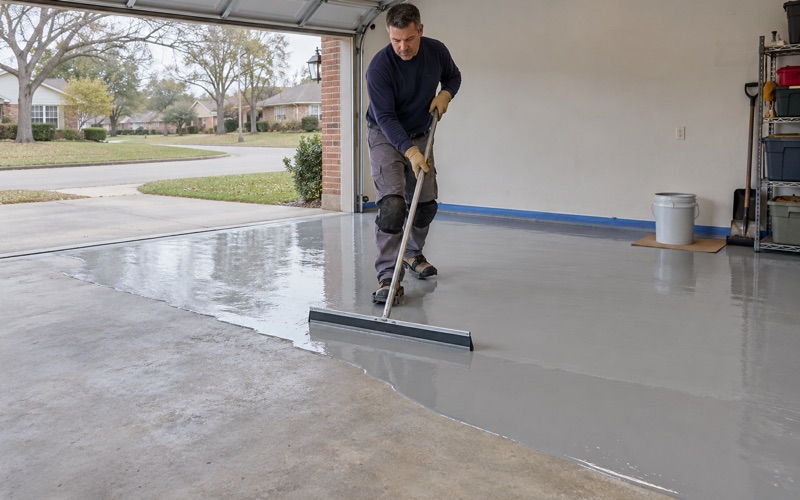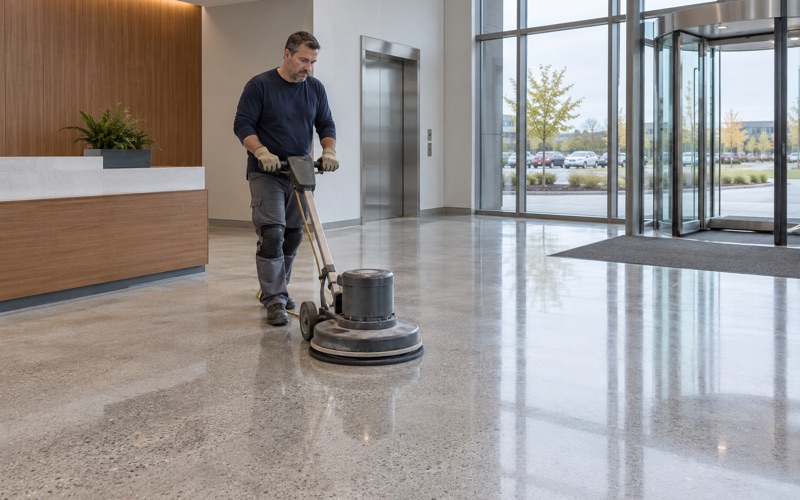
How a Commercial Floor Job Differs
A commercial floor brings traffic counts, chemicals, schedules and inspectors a garage never sees. We start with how the space is used, what rolls over it and when it can be closed, then specify thickness, texture and topcoat for that use. A plan built around the building’s hours matters as much as the product.
Dealership Service Drives and Showroom Floors
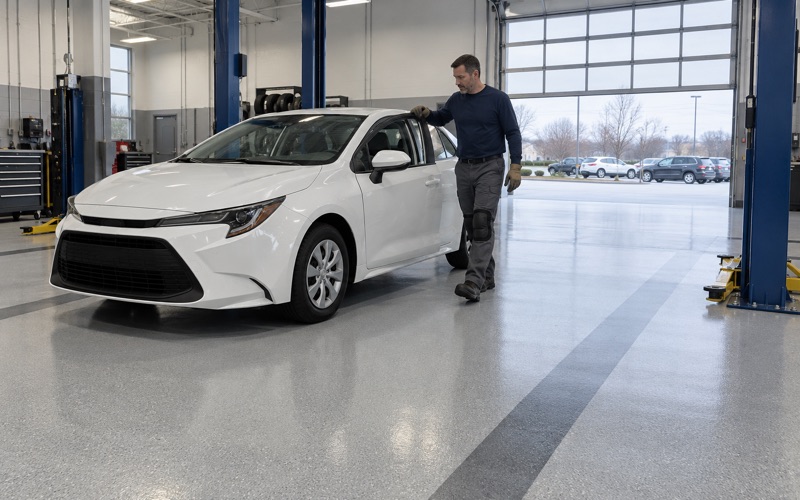
A dealership service lane on Capitol Drive takes road-warm tires all day, with write-up and service opening at seven in the morning six days a week. That leaves overnight and Sunday as working windows. We use fast-cure polyaspartic and polyurea topcoats so a service drive is back in use by opening.
Light Industrial and Business-Park Floors
Brookfield’s industrial and office parks hold warehouse, assembly and showroom floors carrying carts, lifts and pallet racking. We specify thicker 100% solids epoxy builds or urethane cement where loads and impact demand them, and plan the work around racking and production rather than asking a business to empty its floor.
Filling Slab Joints Before Forklifts Cross Them
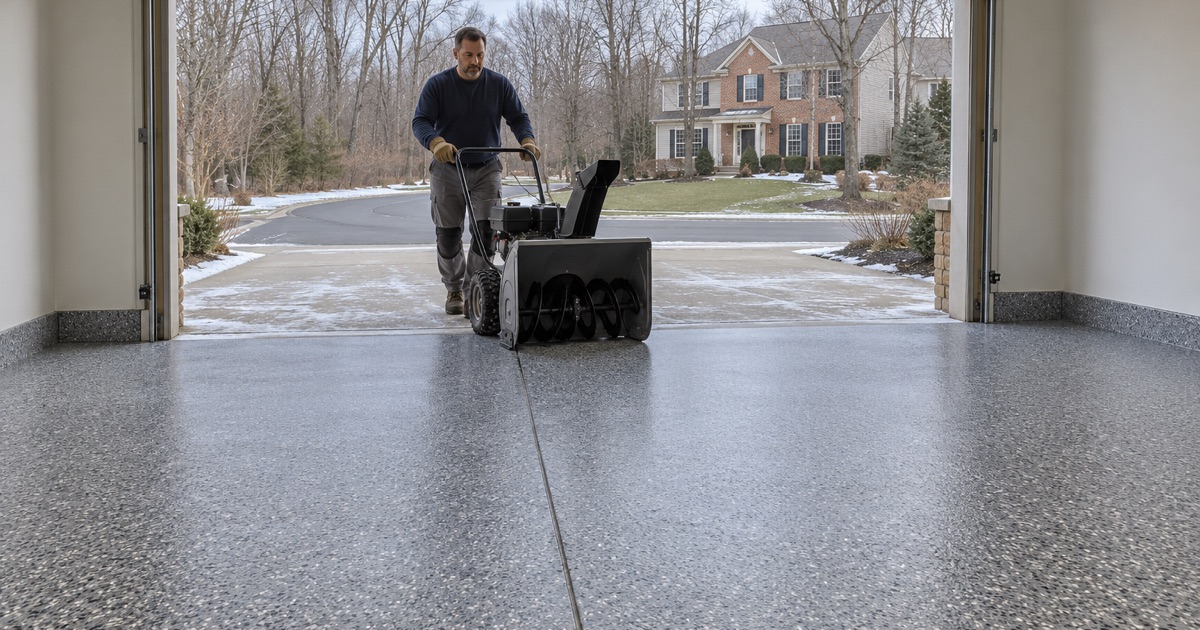
Control joints in a warehouse slab chip at the edges once hard wheels start crossing them. We fill those joints with a semirigid joint filler before coating, so the edges are supported and cart wheels roll smooth. A coating bridged over an open joint cracks along that line the first time the slab moves.
Restaurant Kitchen Floors Under Waukesha County Plan Review
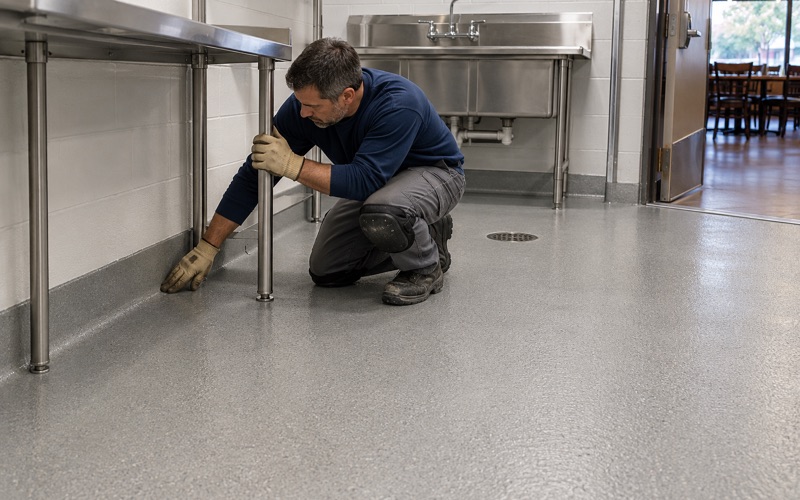
In the City of Brookfield, restaurant floors fall under Waukesha County Environmental Health, not a city health department. A remodel can trigger county plan review, with the application asked for 30 days before construction. We plan kitchen floors with the 4-inch coved base and floors sloped to drain, the junction FDA Food Code 6-201.13 addresses.
Urethane Cement for Hot Washdown
Commercial kitchens that wash down with hot water and steam put a floor through thermal shock that ordinary epoxy can crack or delaminate under. Urethane cement handles that heat cycling and the fats and acids of food prep. We use it where hot washdown is daily, and save epoxy systems for dry back-of-house rooms.
Clinic and Medical Office Floors
A clinic or medical office cannot close for a week, so its floor is planned around patient hours. We phase the work room by room, use low-odor, fast-cure systems, and finish with seamless, cleanable surfaces suited to frequent disinfection. Each phase is scheduled so the next morning’s appointments can go ahead.
Retail Tenant Spaces and Back-of-House Floors
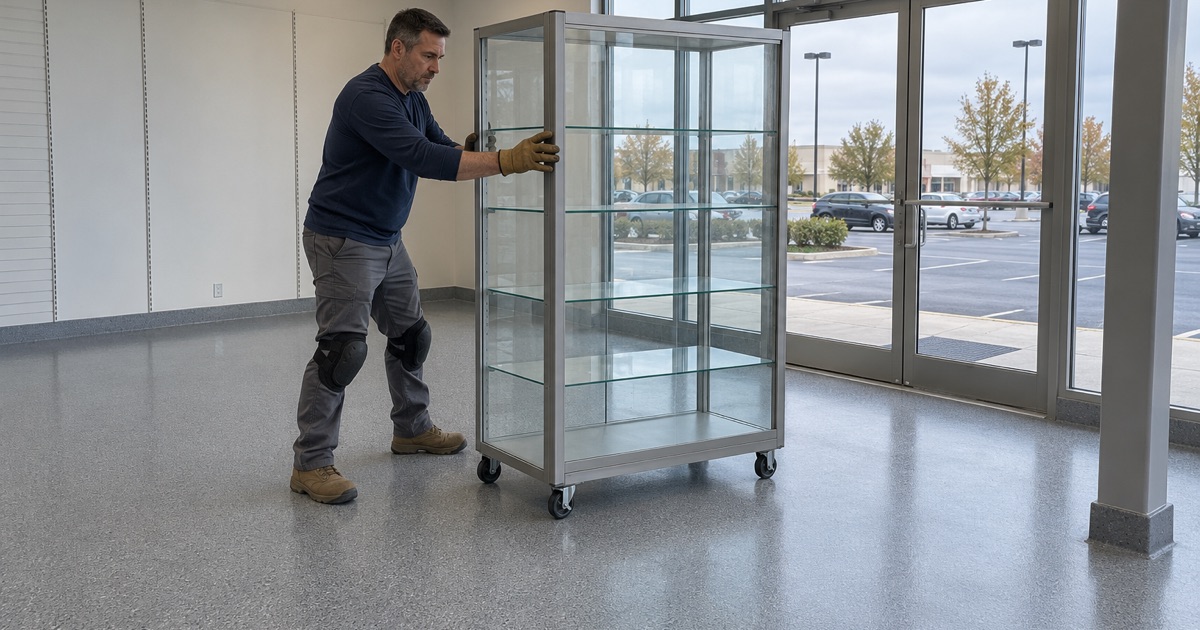
Retail tenant spaces and the back-of-house floors behind a shopping center storefront take carts, pallets and constant foot traffic. We work around store hours and landlord rules, using polished concrete or a durable coating suited to the traffic. Receiving areas get texture for wet days and joint filling where hand trucks roll.
Static-Dissipative and ESD Floors
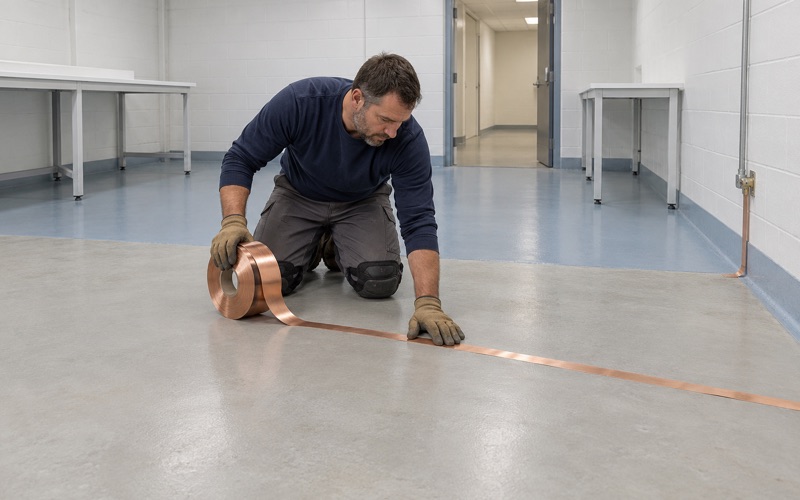
Electronics assembly and server areas need floors that bleed static charge away in a controlled way. ESD and static-dissipative coatings carry conductive materials and a grounding system, and each is specified to a resistance range rather than a look. We install to the range your process calls for and verify it with a meter.
Where Grinding Slurry Goes
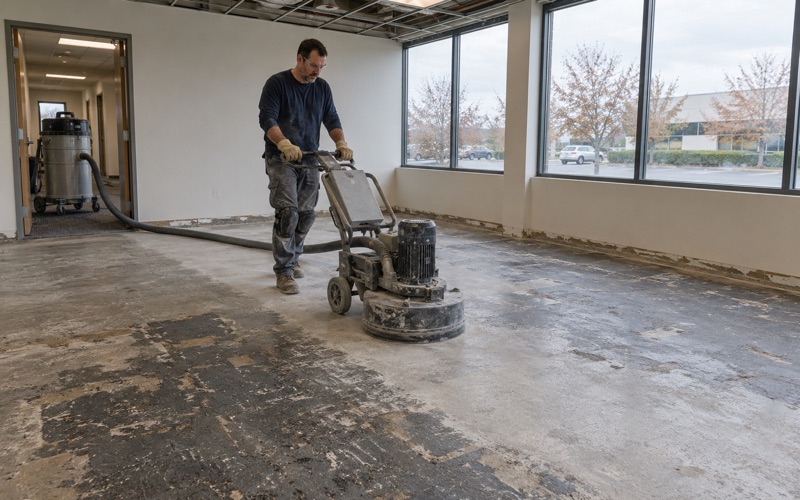
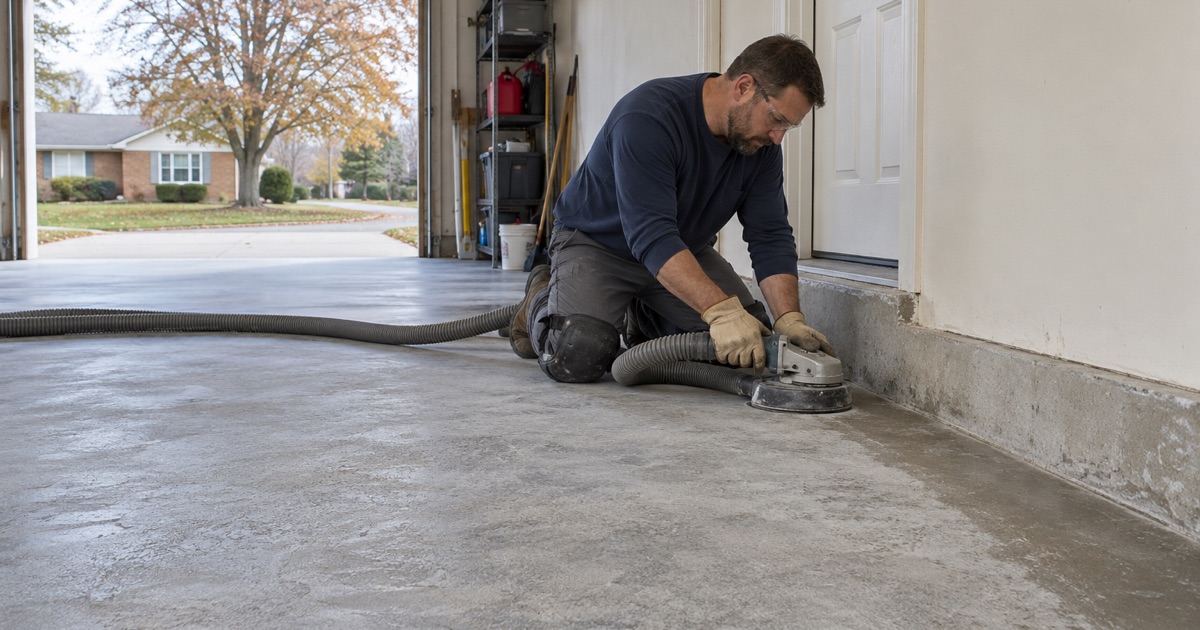
Grinding throws off dust and, on wet jobs, a gray slurry of concrete fines. We collect dust with vacuums at the grinder and gather slurry on site for disposal. Brookfield’s sanitary flow splits between MMSD and the city’s Fox River Water Pollution Control Center, which runs an industrial pretreatment program, so nothing goes down a floor drain.
Wisconsin VOC Rules for Floor Coatings
Wisconsin has no state rule of its own for VOCs in architectural coatings. The federal 40 CFR 59 Subpart D rule sets the limits, and it binds the manufacturers and importers who make and sell the product. Brookfield also sits in the Milwaukee 2015 ozone nonattainment area, so we favor low-VOC systems on occupied jobs.
Overnight and Weekend Floor Work
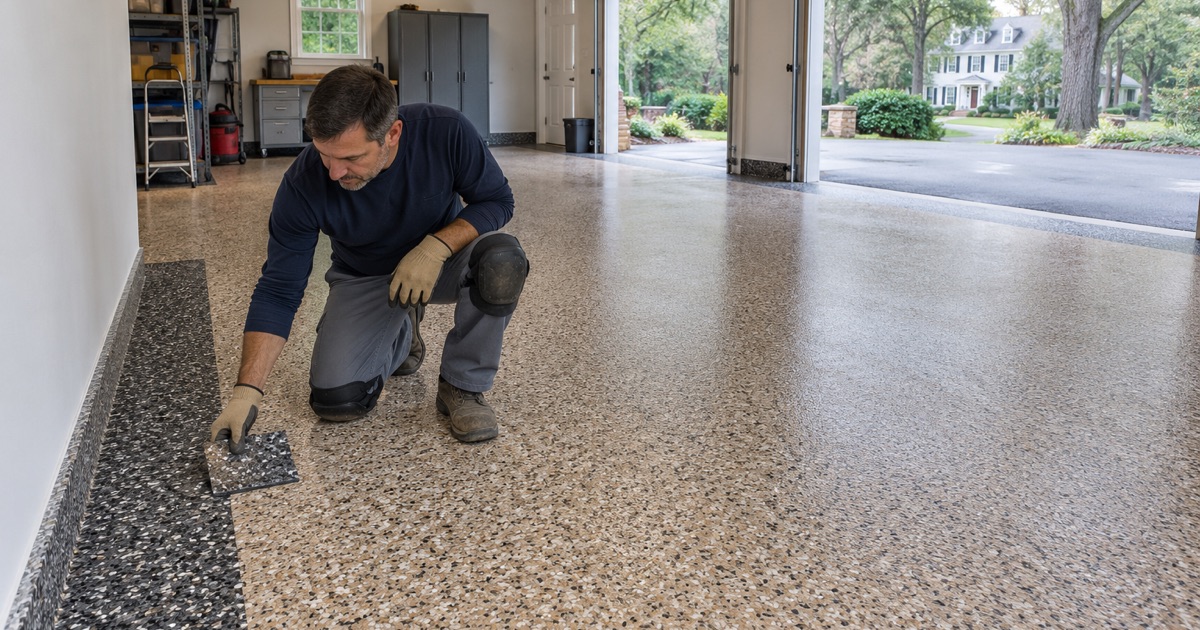
Offices, retail, clinics and dealerships often cannot close during business hours. We schedule grinding, coating and cure overnight or over a weekend, so the building opens on time. Fast-cure systems and a written timeline let a manager plan around the work rather than lose a day of business to it.