Brookfield Epoxy Flooring installs metallic epoxy floors in Brookfield, WI, serving surrounding cities including Wauwatosa, West Allis, Pewaukee, New Berlin and Menomonee Falls. Metallic epoxy is the most decorative floor we install, and our 20+ years of preparing concrete matters more on this system than on any other, because every flaw in the slab shows through the finish.
A metallic floor uses mica-based pigments suspended in clear epoxy. As the resin is worked and levels, the pigment flows into swirls, veins and depth that look like polished stone, lava or moving water. The effect depends on the slab, the mixing, the timing and the hands working it.
The proposal names the product, the full system build and the finished thickness, and on a home job, a written contract with the products and any warranty is in place before a deposit.
Metallic Epoxy Floors for Homes
Finished Basements and Family Rooms
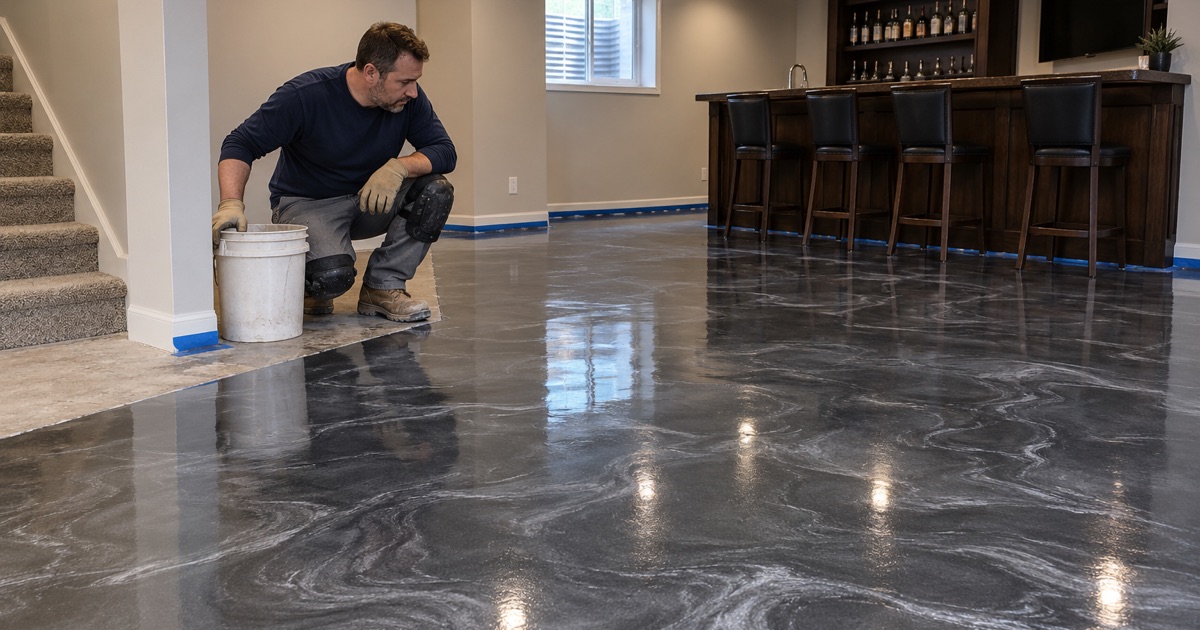
In a finished basement, a metallic floor turns a gray slab into a feature that looks at home next to a bar, a media room or a play area. It pairs well with rugs and sectional furniture, and it cleans with a damp mop.
The basement slab still gets the same moisture testing as any other floor we coat. A metallic finish is a thick, continuous film, and moisture moving up from below lifts it as readily as it would a plain coat. Readings over the limit call for a moisture-mitigation primer first.
Showpiece Garages
Car collectors and hobbyists often want a garage floor that matches the cars. A metallic floor delivers a high-end look, but a Brookfield garage still takes road salt, calcium chloride brine and road-warm tires. We build a full-thickness system with a tough polyaspartic topcoat and can add fine anti-slip aggregate where the floor will be wet.
For a garage that is a daily driver’s winter home, we will also talk honestly about a flake system, which hides salt residue and wear better. The right floor depends on how the space is used.
Home Offices, Bars and Studios
A home office, a basement bar or a studio can carry a metallic floor in brand or decor colors. These rooms see lighter traffic than a garage, which lets the gloss stay at its best. We match the topcoat sheen to the lighting so the floor reads rich rather than glaring.
Color choice in these rooms usually starts with what is already there: cabinetry, wall color, a bar top or a brand palette. We pour sample boards in two or three combinations so you can hold them against the room, since a metallic color looks different under warm basement lighting than under daylight.
Metallic Epoxy Floors for Businesses
Showrooms and Retail Spaces
In a showroom or boutique, the floor is part of the display. A metallic finish in silver, charcoal, bronze or a brand color sets the tone the moment customers walk in. We schedule work after hours or in phases, so the store keeps trading while the floor goes in.
Retail floors need a stronger topcoat than a home basement. We use abrasion-resistant polyaspartic or urethane topcoats and place walk-off mats at entries, so grit tracked in from the parking lot does not dull the floor.
Offices, Lobbies and Salons
Lobbies, office common areas and salons benefit from a seamless, striking floor that is easy to keep clean. Metallic epoxy hides small stains well and has no grout lines. We plan overnight and weekend work around the hours the building has to stay open.
In a salon, chemicals and dyes are part of daily work, so the topcoat is chosen for stain and chemical resistance as well as looks. In a lobby, the concern is grit from winter boots, which is why a matching walk-off mat at the door does as much to protect the floor as the topcoat does.
Restaurants, Bars and Event Spaces
In front-of-house dining rooms and bars, metallic floors create a memorable look. Kitchens and wet prep areas are different, and we use urethane cement or quartz systems there, because those rooms need hot washdown resistance and slip resistance more than visual drama.
How a Metallic Epoxy Floor Is Installed
A Smooth, Ground Slab
Metallic epoxy is self-leveling and clear, so every crack, divot and trowel mark shows. We diamond grind the slab to a consistent profile, fill cracks and pits with epoxy patch, and grind the patches flush. Acid etching is never used, since it leaves an uneven surface that a metallic finish would magnify.
The prep on a metallic floor takes longer than on a flake system, and it is where most of the quality comes from. A rushed grind shows up as dips, ridges and patch outlines in the final finish.
Primer and Tinted Base Coat
After grinding, we prime and apply a tinted 100% solids epoxy base coat. The base color sets the floor’s depth; a dark base makes metallic tones look deeper, while a light base gives a brighter, softer floor. The base coat must cure properly before the metallic layer goes on.
If the base coat cures in cool, damp air, it can develop amine blush, a waxy film that keeps the next layer from bonding. We check for blush before the metallic pour and wash it off when it is present, rather than pouring over it and hoping the layers hold together.
Working the Metallic Layer
The metallic epoxy is mixed with pigment, poured and spread, then worked by hand with rollers, brushes, trowels and sometimes solvent sprays to create movement. Timing matters: the resin has a working window before it starts to set, and the floor has to be worked as one continuous piece without hard lap lines.
Room temperature and the slab’s dew point affect how the resin flows and how long it stays workable. We check both on the day, and we do not pour a metallic layer onto a slab near its dew point.
Protective Topcoat
Many epoxies amber under ultraviolet light, which changes the colors of a metallic floor. We finish with a UV-stable polyaspartic or aliphatic urethane topcoat, which also adds scratch and chemical resistance. The topcoat sheen can be gloss for maximum depth or satin for less glare.
The topcoat is also the layer that takes the daily wear, and it can be renewed. When a busy area starts to look tired, a light sanding and a fresh topcoat bring it back without disturbing the metallic layer underneath, which keeps the pattern you paid for intact.
Living With a Metallic Floor
Scratches, Dust and Daily Care
A smooth, glossy floor shows dust and fine scratches more than a textured flake floor. Dust mopping, a neutral cleaner, felt pads under furniture and mats at entries keep it looking right. Lighter colors and satin topcoats hide wear better than dark, high-gloss finishes.
Avoid harsh solvents, acidic cleaners and abrasive pads, which can haze the topcoat over time. Rolling chairs in a home office or salon do best on chair mats or with soft casters, since hard plastic wheels on one spot slowly wear through even a strong topcoat.
Slip Resistance
Metallic floors are smooth, and smooth floors are slicker when wet. Near doors, in garages and in any area that sees water, we can add fine anti-slip aggregate to the topcoat. It slightly softens the mirror finish, so we discuss where it is needed rather than adding it everywhere.
Moisture and Warranty Exclusions
Most coating warranties exclude failures caused by moisture from below the slab. We read that exclusion out before you sign. Testing the slab first, and adding a mitigation primer where needed, is how we keep a metallic floor from ever reaching that clause.
- 20+ Years Experience
- Moisture Testing in Every Scope
- Written Proposals and Contracts